
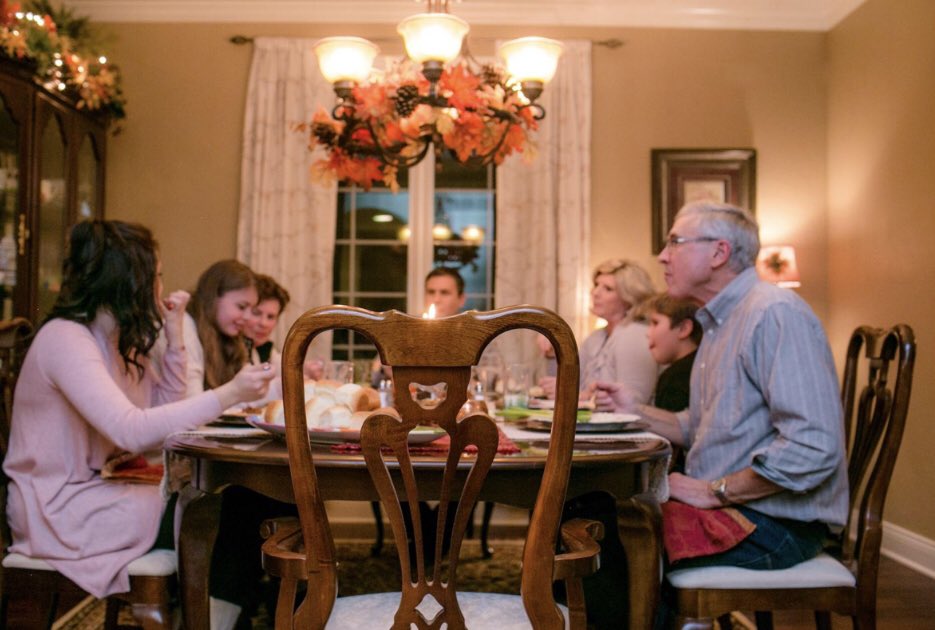
Better or Bitter? How to Decide If Family Estrangement Is Right for You, with Janette Beverley
When Family Distance Feels Like a Punch to the Gut: Understanding Estrangement Without Losing Yourself
You know that feeling when you're scrolling through social media and see yet another post about "cutting off toxic people" or "protecting your peace"? Maybe you've even thought about it yourself—that one family member who makes every gathering feel like walking on eggshells, or worse, the person who's already cut you off without explanation. You lie awake at night replaying conversations, wondering what you did wrong, or questioning if you should finally draw that line in the sand yourself.
Here's the truth: family estrangement is more common than you think, and it's one of the most painful, confusing experiences we face as adults. Whether you're the one considering distance or you're on the receiving end of someone else's silence, the questions are relentless. Am I doing the right thing? Am I overreacting? Will I regret this at my funeral? And perhaps most importantly—how do I protect my mental health and my family without becoming bitter or losing myself in the process?
I recently sat down with Janette Beverley, a licensed therapist specializing in family relationships and anxiety, to talk about what family estrangement really looks like, why it's happening more than ever, and how to navigate these painful situations without regret. What she shared completely shifted my perspective, and I think it will for you too.
The Reality of Family Estrangement: You're Not Alone
Let's start with some eye-opening context. According to a Cornell study Janette referenced, one in four adults in the United States has some kind of estrangement with a family member—whether it's a sibling, parent, or adult child. One in four. That means if you're struggling with family distance right now, you're far from alone.
But here's where it gets complicated: not all estrangement is created equal. Janette explained there are really two different paths that lead to family cutoffs, and understanding which one you're on matters deeply.
The first type involves legitimate trauma—situations of abuse, severe neglect, or ongoing harm where creating distance isn't just healthy, it's necessary for survival.
"In those cases where there is abuse, there is neglect, there is the things that is damaging to the relationship, no judgment on that," Janette said. "You need to keep yourself in a better space."
But then there's the second type, which is becoming increasingly common in our social media-driven culture: estrangement over hurt feelings, miscommunication, or conflicting opinions.
"We don't agree on something. I don't like how you said that. I don't feel like you respect me. And so there's a pushing away or cutting off of family members."
she explained. This is the gray area where many of us find ourselves stuck—somewhere between genuine harm and everyday conflict that, with better communication skills, might actually be workable.

The Boundary Confusion: Are We Protecting Ourselves or Punishing Others?
One of the most powerful distinctions Janette made was about boundaries versus punishment. In our therapy-speak, social-media-influenced world, we throw around the word "boundary" constantly. But do we actually understand what it means?
"A boundary is not an option" ..."It's not, 'Hey this is my opinion, you agree with me or...' A bounadry is, 'Hey, I'm going to talk to you about it.' And once that boundary is set, you understand it, I inderstand it. We both know, 'Hey, this is important to me. Please don't cross this boundary,' then it's a boundary."
The critical piece? Both parties have to understand what the boundary actually is. It can't just be a one-sided declaration followed by radio silence. Real boundaries require conversation first.
I shared a personal example during our conversation—friends who suddenly cut us off, claiming we were "triggering" but refusing to explain what we'd done or give us any chance to understand or apologize. Despite our gentle attempts to reach out over months, we were met with silence and accusations. That's not a boundary—that's a cutoff. And the difference matters enormously.
"The question I would have to ask is, are you estranging for punishing the other person or for protecting yourself?"
Janette posed
"And I think that's important, right? Because do we cut someone off because I don't like what they're saying or doing, I'm assuming the worst, I'm going to cut them off and that's going to make them hurt, right?"
This question stopped me in my tracks, and I hope it does the same for you. If you're considering creating distance from a family member, get brutally honest with yourself: Is this about your safety and wellbeing, or is it about making them pay for hurting you?
The Four Horsemen: Warning Signs You're Heading Toward Estrangement
Janette introduced me to the Gottman Institute's concept of the "Four Horsemen of the Apocalypse"—behaviors that predict relationship breakdown with over 90% accuracy. While these are typically applied to marriages, they're equally relevant to any family relationship teetering on the edge of estrangement:
1. Criticism: You're constantly complaining about this person to others, cataloging their faults and failures.
2. Contempt: You're not just upset about what they did—you dislike them as a person.
"Everything they do makes me mad. My mom is always late. She's horrible and disrespectful and I hate her,"
Janette explained.
3. Defensiveness: You're hyper-reactive to everything this person does, always assuming the worst intentions.
4. Stonewalling: You've shut down, stopped talking, given the silent treatment, and shut the door completely.
If you recognize these patterns in yourself, pause. These behaviors don't just predict relationship failure—they actively create it. As psychologist Harriet Lerner once wrote,
"Anxiety, like love, is contagious. We can catch it from anyone, and give it to anyone."
When we operate from these four horsemen, we spread relational toxicity that makes reconciliation nearly impossible.
The antidote? Curiosity, communication, and self-reflection before you make permanent decisions.
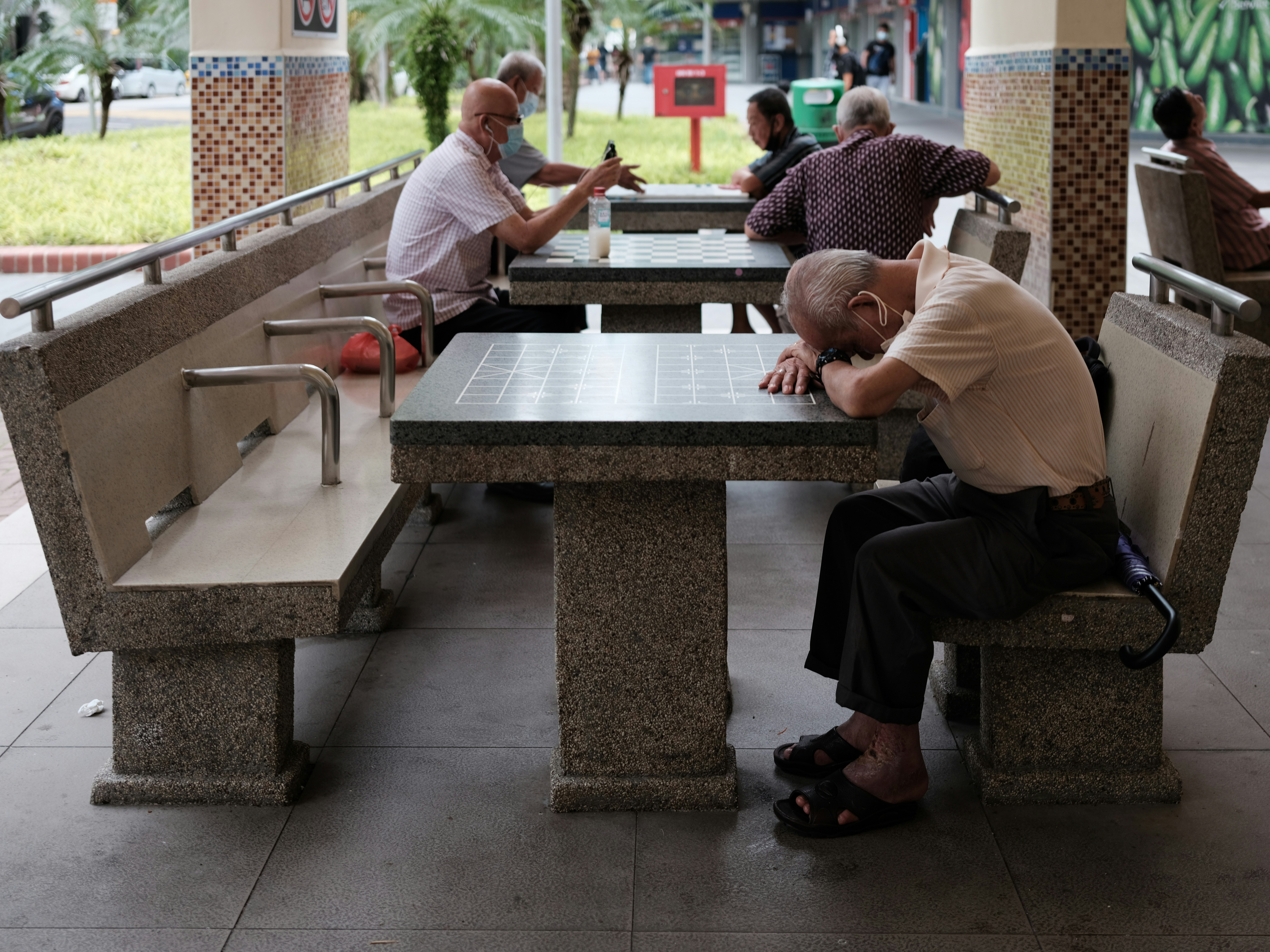
When Estrangement Might Be Necessary: The Peace vs. Bitterness Test
Now, I want to be crystal clear: I'm not suggesting you need to maintain relationships that are genuinely harmful. There are absolutely situations where creating distance—even permanent distance—is the healthiest choice for you and your family.
So how do you know if you're making a wise decision versus an impulsive, reactive one?
Janette offered several guideposts:
Start with conversations, not cutoffs. "A lot of times estrangement doesn't happen in one instance, it's usually a lot of things that build up over time," she said. "So make sure that those conversations are there... a lot of times we get offended, but we don't say anything. We get offended, we hold it and we just build this resentment and it grows and it grows and there's no conversation."
Check your emotional state. If you feel peaceful, calm, and clear that this decision is right—not bitter, vindictive, or desperately seeking validation—that's a good sign. When I shared my own current situation of considering a break from a family member, I emphasized how different it felt this time: "I feel very peaceful, very calm. There's been several conversations between key people... it is more this peaceful, intuitive feeling that key things are not in place to make this healthy for all parties involved right now."
Janette affirmed this:
"I feel peaceful. I don't feel angry. I don't feel bitter. I feel like I need this. I feel like this is right for me."
Consider the long view. One exercise I use with clients is the "funeral test"—if you were at your funeral watching as a ghost, would you have regrets about how you handled this relationship? Would you wish you'd tried harder, been kinder, extended more grace? Or would you feel proud of protecting yourself and your boundaries?
As Janette beautifully put it,
"There seems to be two different kinds of people, those who can take their circumstances and become better, and those who take their circumstances and become bitter. And we get to choose what that looks like."
The Grief of Being Cut Off: When You're the One Left Behind
What happens when you're not the one choosing distance—when someone you love has cut you off without explanation or refuses to engage in conversation to repair things?
This is perhaps the most painful position to be in because you're powerless to fix what you don't understand. Janette was compassionate but honest about this reality: "The hard part is, now I can't apologize or understand... if there's no chance of reconciliation at all because that cutoff is there, then it's a whole nother thing. 'Cause then I'm asking people, 'Hey you're gonna have to grieve this loss.'"
She continued,
"That's when it's really hard too, because you're right, like, I can't apologize or understand...This is a considerable loss. There's a loss there that I don't understand, I don't know how to fix it. You're not letting me fix it. We're not having convsersationgs that can heal this. And so they're stuck and we feel stuck."
The work then becomes internal: grieving the relationship you hoped for, managing the pain without letting it turn to bitterness, and focusing your energy on relationships that are healthy and reciprocal. This doesn't mean the pain goes away—Janette admitted,
"If you see them on a regular basis, it's going to hurt every time. I wish I could say that's going to go away, but it doesn't."
But it does mean you can learn to "remember without letting it hurt" quite as deeply. You process the grief in waves, refocusing each time on what you can control: your own character, your response, your choices to show up as your best self regardless of how others treat you.

Keeping the Door Open: The Difference Between Estrangement and Permanent Cutoff
Here's something crucial that Janette emphasized: there's a significant difference between temporary estrangement and permanent cutoff.
"What people do a lot of times is they grab their anger or their sadness, or their bitterness and they start to become more angry or they become more distant, or they be unkind or they talk about 'em, and then that door shut, right?" she explained. "And then we no longer have an estrangement. We have a cutoff and the door is slammed shut."
In contrast, healthy estrangement might look like:
"The door's just a little bit open. I'm taking a break for a minute, but I hope we can get back to something better."
If reconciliation is something you ultimately want—whether you're the one creating distance or on the receiving end—your actions during this time matter enormously. How you speak about this person, how you treat them when you do see them, whether you gossip or remain kind—all of this determines whether that door stays cracked open or slams shut permanently.
"If your goal is to have this person back in your life, if it's a family member, a loved one, that you're like, 'I can't imagine my life without them,' then we're gonna work with that goal in mind," Janette advised. "So we're gonna treat them in a way that's gonna allow that room to be there."
The Generational Divide: Social Media and the Estrangement Trend
We can't talk about modern family estrangement without addressing the elephant in the room: social media has fundamentally changed how we view and handle conflict.
"We live in a social media world, right?" Janette pointed out. "And there's TikTok trends and reels everywhere about estrangement, cutting people out. If they're not serving you, let 'em go. The problem is we're listening to influencers, comedians who are going, 'Yeah, it just made me the best, happiest person in the world when I cut my person out because they crossed a boundary for me.'"
This creates what I call the "trauma Olympics"—a culture where we compete over whose childhood was worse, where normal parental imperfection gets labeled as abuse, and where any discomfort is automatically categorized as toxic and requiring complete removal from our lives.
Janette shared a powerful reminder for both generations: "I think parents also have to be careful too, when we're trying to be open and listen to our children who come to us and say, 'You know what? I think you were abusive. I think you neglected or did not treat me well.' Before we get defensive, before we jump back and go, 'Hold on, my parents did that and I'm not calling them abusive,' we live in a different world now."
At the same time, she cautioned younger adults:
"Be aware of your own intentions. Do I need to feel like the victim? What do I need from this? I always tell my clients, please be curious. Be curious as to why you need people to know that you were abused, or you were neglected when you were spanked, or sent to your room or but in timeout."
This isn't about dismissing genuine harm—it's about honest self-examination to ensure we're not weaponizing therapeutic language to avoid the hard work of relationship repair.

A Story of Grace: When Forgiveness Keeps the Door Open
One of the most moving moments in our conversation was when Janette shared her father's story. His father was an alcoholic, and most of his siblings completely cut off their dad, never reconciling before he died.
But Janette's father chose differently.
"My dad forgave his father...He chose to say, 'Hey, my dad's got a problem. He's got a mental illness, he's got an addiction. This is my dad and I'm going to love him for what he is."
Because of that choice, Janette knew her grandfather—one of the only cousins in her family who did. "I am grateful for my dad that he showed up in a way of forgiveness instead of condemnation," she reflected. "He could have done either one."
Her father didn't have daily contact with his father—he maintained appropriate boundaries—but he left the door open for relationship. And that grace created connection across generations that otherwise would have been lost forever.
This story perfectly illustrates what Janette said earlier:
"We are meant to have people in our lives. People need people, absolutley. So it is important to figure out what you want each relationship to look like and what you're willing to sacrifice to keep or not."
Moving Forward: Practical Steps Whether You Stay or Go
So where does this leave you if you're facing family estrangement—either as the one considering it or the one experiencing it?
If you're considering creating distance:
Have clear, honest conversations about what's hurting you before making permanent decisions
Examine your motivations: Is this protection or punishment?
Check for the four horsemen in your own behavior
Assess whether you feel peaceful and clear, or bitter and reactive
Consider the long-term implications and potential regrets
Remember that true boundaries include mutual understanding, not just one-sided declarations
If someone has cut you off:
Allow yourself to grieve the loss without obsessing over what you can't control
Focus on being the kind of person who leaves the door open, even if it hurts
Avoid gossip, bitterness, and retaliation that will slam the door permanently
Invest your energy in healthy relationships that are reciprocal
Work on your own healing and character development
Trust that time and your consistent character may eventually create space for reconciliation
For everyone:
Give people grace. Recognize that everyone is doing their best with the resources, knowledge, and emotional capacity they have. As Brené Brown reminds us,
"We're all doing the best we can."
This doesn't excuse harmful behavior, but it does create space for nuance, growth, and eventual repair.
Finding Your Way Home to Yourself
Here's what I've learned through my own family challenges and from working with hundreds of clients: family estrangement is rarely black and white. It's messy, painful, and filled with more questions than answers.
Sometimes creating distance is the bravest, healthiest thing you can do. Sometimes staying and working through the discomfort is. The key is making that choice from a place of wisdom, peace, and honest self-reflection rather than reactivity, social media influence, or the desire to make someone else hurt as much as you do.
You don't have to have all the answers right now. You don't have to make permanent decisions in moments of temporary pain. What you do need is to keep checking in with yourself, seeking wisdom from trusted people who know the full story, and staying curious about your own motivations and patterns.
Because at the end of the day, the relationship you're really protecting is the one with yourself. And that relationship requires you to show up with integrity, humility, and courage—whether you're drawing boundaries, seeking reconciliation, or simply surviving another day in the painful in-between.
The life you're trying to build—one filled with peace, purpose, and authentic connection—doesn't come from cutting everyone off who challenges you. But it also doesn't come from being a doormat or tolerating genuine harm. It comes from knowing the difference, having the hard conversations, and making choices you can live with when you look back from that imaginary funeral.
You deserve relationships that feel safe and nourishing. You also deserve to become the kind of person who extends grace, seeks understanding, and stays better instead of bitter—even when it would be easier to slam the door shut.
Whatever you decide, know that you're not alone in this struggle. One in four of us are right there with you, trying to figure out how to love our families well while also protecting our peace and mental health. And that's exactly what we're here to help you do—one honest conversation, one brave boundary, and one grace-filled choice at a time.
If you're struggling with family estrangement or other relationship challenges, reach out at hello@fulfillmenttherapy.org. For more resources on creating fulfillment in your family and personal life, visit fulfillmenttherapy.org or connect with us on Instagram and Facebook @fulfillmenttherapy.
- Kendra
*Listen to our podcast episodes 312 and 313/ Better or Bitter? How to Decide If Family Estrangement Is Right For You, with Janette Beverly
Better or Bitter? How to Decide If Family Estrangement Is Right for You, with Janette Beverley
Connect with Kendra:🤗
ALL LINKS → https://linktr.ee/fulfillmenttherapy
Website → https://fulfillmenttherapy.org
Contact → hello@fulfillmenttherapy.org
Instagram → @fulfillmenttherapy
Facebook Community → http://bit.ly/fulfillmenttherapy
Facebook Group → Private FB Group
Schedule 1:1 Coaching → https://fulfillmenttherapy.org/1-on-1-coaching
Chat → 1-986-910-5172 *text questions & topic requests

Phone
(986) 910-5172


